Mantra & Co. - Advocate & Tax Consultant

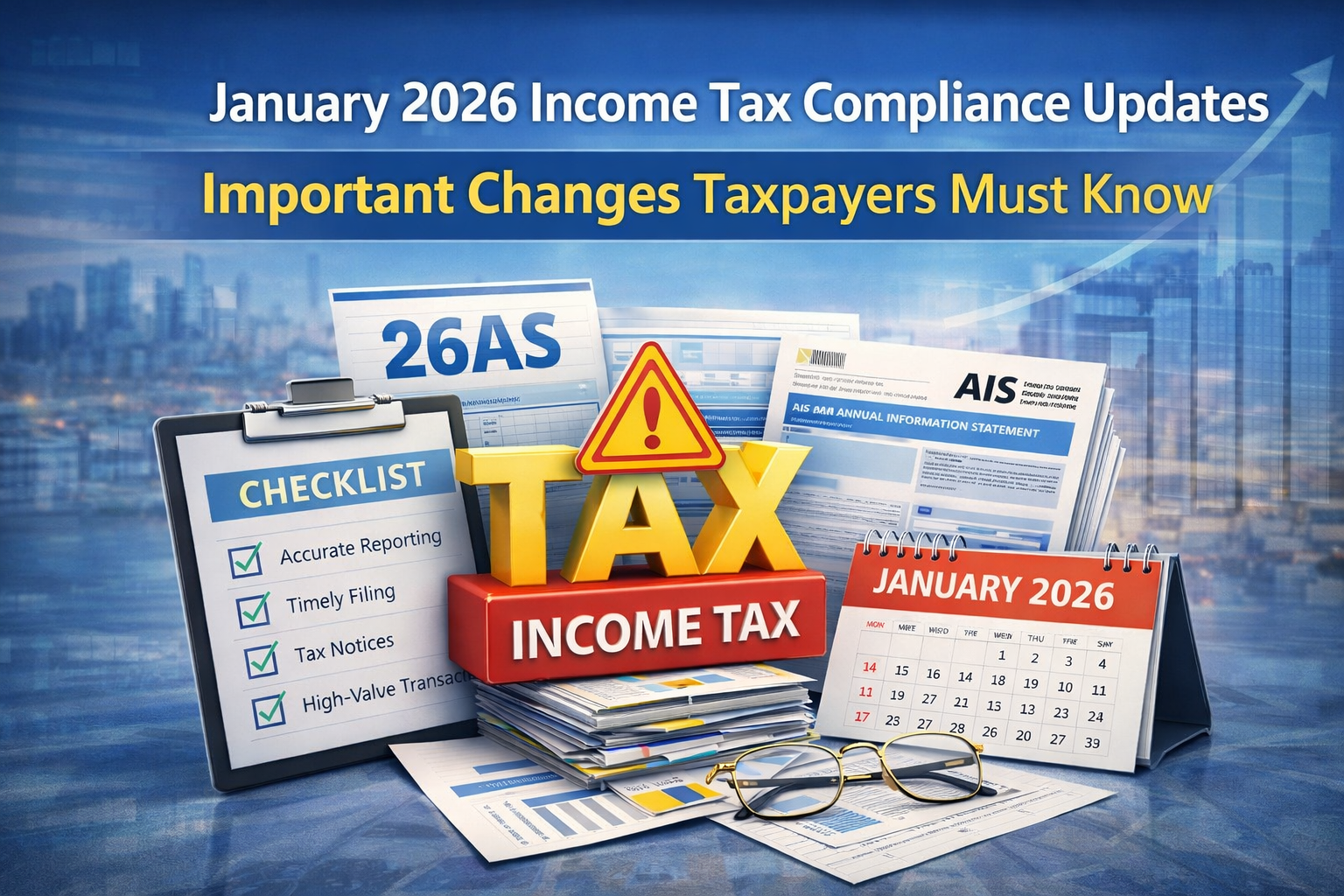
January 2026 Income Tax Compliance Updates – Important Changes Taxpayers Must Know

January 2026 Income Tax compliance updates explained. Know important changes, notice risks, and practical steps to avoid penalties.
From January 2026, Income Tax compliance has become more system-driven due to enhanced data matching and automated monitoring by the department.
Many taxpayers are receiving notices and adjustments not due to intentional defaults, but because of reporting mismatches and delayed compliance.
This article explains the important Income Tax compliance updates applicable from January 2026 and the practical steps taxpayers should follow to avoid notices and penalties.
1. Increased Monitoring Through AIS and Form 26AS
From January 2026, the Income Tax Department has further strengthened data matching through AIS and Form 26AS.
Income, deductions, and high-value transactions are now automatically compared with the return filed by the taxpayer. Any mismatch may result in adjustments or notices.
2. Higher Risk of Notices Due to Reporting Mismatches
Taxpayers may receive notices where income reported in the return does not match with AIS or Form 26AS data.
Common mismatch areas include interest income, capital gains, salary details, and high-value transactions.
3. Stricter Timelines for ITR Revision and Rectification
From January 2026, the timelines for revising or rectifying Income Tax Returns have become more stringent.
Delays in correcting errors or omissions may result in loss of the opportunity to revise the return, potentially leading to prolonged litigation or additional tax demands.
Practical Note:
Timely review of AIS and Form 26AS before filing the return has become essential.
4. Increased Scrutiny of High-Value Transactions
High-value financial transactions are under closer scrutiny through integrated reporting mechanisms.
Transactions relating to property, securities, cash deposits, and foreign assets are automatically tracked and matched with the return filed by the taxpayer.
5. Practical Income Tax Compliance Checklist for Taxpayers
To reduce the risk of notices, penalties, and adjustments, taxpayers should follow a disciplined compliance approach:
- Verify AIS and Form 26AS before filing the return
- Report all sources of income accurately
- Maintain proper documentation for deductions and exemptions
- Respond promptly to any Income Tax notices
- Avoid last-minute return filing
Conclusion
Income Tax compliance after January 2026 requires greater accuracy, timely reporting, and proactive monitoring of tax records.
As systems become more automated, even minor mismatches can trigger notices and adjustments.
Adopting a careful and well-planned compliance approach is essential to avoid unnecessary disputes.
Disclaimer: This article is for informational purposes only and does not constitute legal or tax advice. The views expressed are based on the current understanding of law and portal functionality as on the date of publication. Readers are advised to seek professional advice before taking any action.
If you have any general query or wish to understand the subject better, you may share your question in the comments below.
For insights into GST compliance issues arising from portal automation, you may also read our article on GST compliance updates and portal-driven changes.