Mantra & Co. - Advocate & Tax Consultant

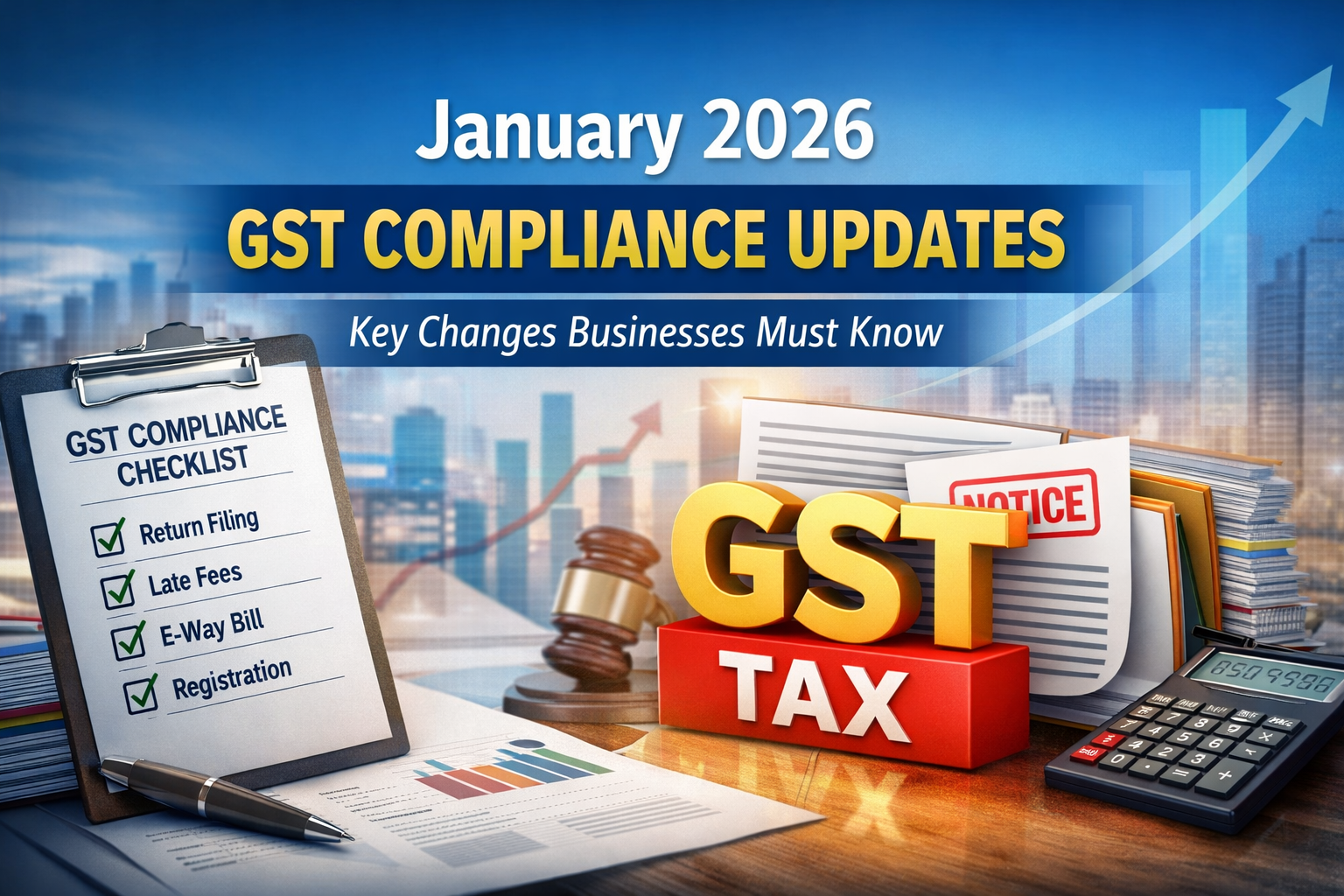
January 2026 GST Compliance Updates – Key Changes Businesses Must Know

January 2026 GST compliance updates explained. Know key changes, return blocking risks, late fees, and practical steps to avoid GST penalties.
From January 2026, GST compliance has become more system-driven due to increased portal automation. Businesses are facing return blocking, automated late fees, and registration issues mainly due to delayed or incomplete compliance. This article explains the key GST compliance updates effective from January 2026 and how businesses can avoid penalties and operational disruptions.
1. GST Portal Automation from January 2026
The GST portal has strengthened automated monitoring of return filing, profile verification, and compliance behaviour.
Non-filing, repeated delays, and data mismatches are now directly flagged by the system without manual intervention.
2. Late Fee & Interest – System Driven
Late fees and interest on delayed GST returns are now calculated automatically by the portal.
Even Nil returns are subject to late fees, leaving no scope for ignoring return filing timelines.
3. GST Return Blocking for Continuous Non-Filing
From January 2026, the GST portal has become stricter in identifying continuous non-filers.
If GSTR-1 or GSTR-3B returns are not filed for consecutive tax periods, the system may block the return filing facility automatically.
Once blocked, the taxpayer may face difficulties in filing future returns and generating e-way bills, which can directly disrupt business operations.
Practical Note (important):
In most cases, return blocking happens due to delay or oversight rather than tax evasion.
4. Increased Risk of GST Registration Suspension
GST registrations are now closely monitored through portal-based verification.
Mismatch in bank details, incorrect address information, inactive business status, or prolonged non-compliance may lead to temporary suspension of GST registration.
During suspension, taxpayers are not allowed to make taxable supplies or file returns, which can seriously affect business continuity.
Bank account details – earlier portal did not take action, now it will suspend registration
Bank account details-earlier portal did not take action, now it will suspend registration.
Tip:
Regular review of GST profile details has become as important as return filing.
5. Practical GST Compliance Checklist for Businesses
To avoid penalties, blocking, and operational issues, businesses should follow a disciplined GST compliance approach:
- File GSTR-1 and GSTR-3B within due dates
- Do not ignore Nil return filing obligations
- Keep GST profile, bank account, and address details updated
- Regularly reconcile turnover and tax liability
- Respond promptly to any GST portal notices or alerts
6. Three years return rule-blocking is continuing
The three-year return rule is active. If your returns are pending and they are older than three years, make sure you file them. The portal has started continuous blocking of such returns. As periods move forward, the portal will keep blocking whatever falls into the live three-year time limit. So clear the pendency now, because later you will not get the same flexibility.
7. Start of new year – calculate annual aggregate turnover and be ready for threshold-based compliances
New year has begun, so calculate your annual aggregate turnover. Even if you are not registered, check whether your PAN India turnover is crossing the registration threshold. If you cross the threshold, registration is mandatory within the prescribed days. Annual aggregate turnover is important for many other GST compliances as well. Also, if your turnover crosses the specified limit, e-invoicing can become mandatory from the next period, so you must monitor turnover time to time.
Conclusion
GST compliance after January 2026 requires timely filing, accurate reporting, and regular monitoring of portal alerts.
As GST systems become more automated, even small lapses can lead to return blocking, suspension, and financial consequences.
Proactive compliance and professional guidance are the best ways to ensure smooth GST operations and avoid unnecessary disputes.
Disclaimer: This article is for informational purposes only and does not constitute legal or tax advice. The views expressed are based on the current understanding of law and portal functionality as on the date of publication. Readers are advised to seek professional advice before taking any action.
If you have any general query or wish to understand the subject better, you may share your question in the comments below.
For insights into Income Tax compliance issues arising from portal automation, you may also read our article on January 2026 Income Tax Compliance Updates