Mantra & Co. - Advocate & Tax Consultant

Demand and Recovery Mechanism under Income Tax: Understanding How Tax Dues Are Recovered

Introduction
In the income tax system, filing a return and completing assessment proceedings are not always the final steps. In certain cases, the Income Tax Department may determine that additional tax is payable by the taxpayer. When such additional tax liability arises, the department formally communicates the amount payable through a tax demand notice.
Once a tax demand is raised, the next stage involves the recovery mechanism, which is the legal process used by the department to collect unpaid tax dues from taxpayers.
Understanding how tax demand and recovery procedures work is important for both taxpayers and professionals. Awareness of these procedures helps taxpayers respond appropriately and avoid unnecessary penalties or enforcement actions.
This article explains the demand and recovery mechanism under the Income Tax Act, including how demand arises, the time allowed for payment, and the powers available to the tax authorities in case of non-payment.
Watch the Complete Video Explanation
This topic has also been explained in detail through our video session. Watch the complete explanation to understand how internships and professional courses work together to build practical expertise in accounting and taxation.
When Does a Tax Demand Arise?
A tax demand arises when the Income Tax Department determines that a taxpayer has an outstanding liability after processing the return or completing assessment proceedings.
Demand may arise in several situations, such as:
• Adjustment during processing of return under section 143(1)
• Additions made during scrutiny assessment under section 143(3)
• Best judgment assessment under section 144
• Reassessment proceedings under section 147/148
In each of these cases, the department may conclude that the tax already paid by the taxpayer is insufficient. The difference between the tax determined and the tax already paid becomes the tax demand.
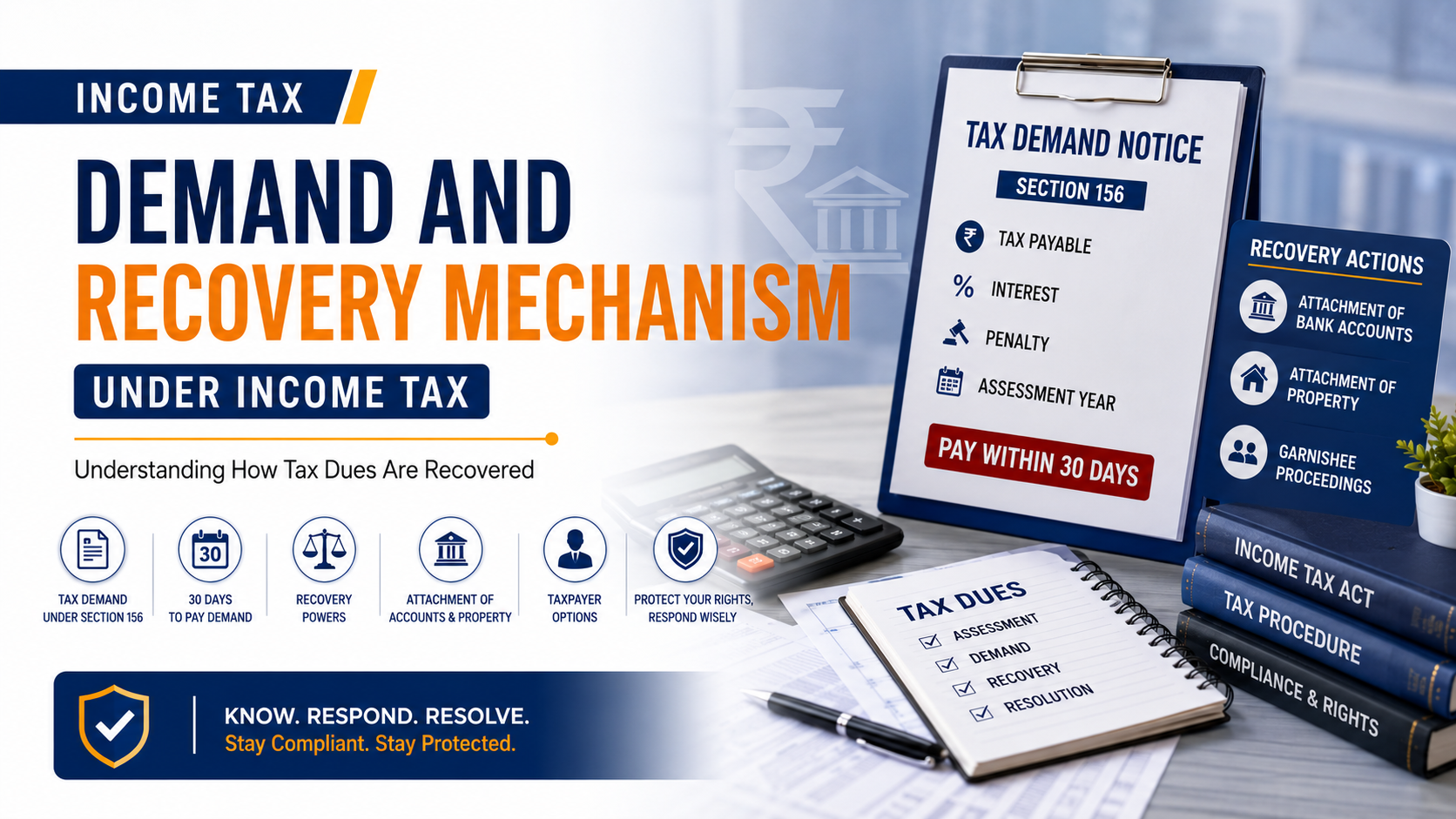
Demand Notice under Section 156
When tax demand is raised, the department issues a Demand Notice under Section 156 of the Income Tax Act.
This notice specifies:
• the amount of tax payable
• applicable interest
• penalties, if any
• the assessment year to which the demand relates
The demand notice serves as an official communication requiring the taxpayer to pay the specified amount within the prescribed time.
Time Limit for Payment of Demand
Generally, the taxpayer is required to pay the tax demand within 30 days from the date of service of the demand notice.
If the demand is not paid within the prescribed time, the taxpayer may be treated as a defaulter, and recovery proceedings may begin.
In certain circumstances, the Assessing Officer may allow a shorter or longer time period for payment depending on the situation.
Consequences of Non-Payment of Tax Demand
Failure to pay the demanded tax amount within the specified time can result in several consequences.
1. Interest Liability
If tax demand remains unpaid, interest may continue to accumulate under relevant provisions of the Income Tax Act.
2. Initiation of Recovery Proceedings
The tax department may initiate formal recovery proceedings to collect the outstanding amount.
3. Adjustment Against Refunds
If the taxpayer becomes eligible for a refund in another assessment year, the department may adjust that refund against the outstanding demand.
Recovery Powers of the Income Tax Department
The Income Tax Act provides the department with certain legal powers to recover tax dues when taxpayers fail to make payment voluntarily.
These powers are exercised through the Tax Recovery Officer (TRO).
Some of the commonly used recovery actions include:
Attachment of Bank Accounts
The department may issue instructions to banks to freeze or attach the taxpayer’s bank accounts until the outstanding demand is recovered.
Attachment of Property
Movable and immovable properties belonging to the taxpayer may be attached as part of recovery proceedings.
Garnishee Proceedings
In some cases, the department may instruct third parties who owe money to the taxpayer to pay the amount directly to the tax authorities.
These measures are generally taken only when taxpayers fail to respond or cooperate with the department.
Options Available to Taxpayers
Receiving a tax demand notice does not necessarily mean that the taxpayer must immediately accept the liability without review.
The taxpayer has several options depending on the situation.
Paying the Demand
If the demand is correct and undisputed, the taxpayer may pay the amount within the prescribed time.
Filing a Rectification Application
If the demand arises due to a clear mistake, such as incorrect TDS credit or computational error, the taxpayer may file a rectification application under Section 154.
Filing an Appeal
If the taxpayer disagrees with the assessment order that created the demand, an appeal may be filed before the Commissioner of Income Tax (Appeals).
Request for Stay of Demand
In certain cases, the taxpayer may request the tax authorities to grant a stay on recovery proceedings until the appeal is decided.
Importance of Proper Response
Ignoring a tax demand notice can lead to serious consequences. Taxpayers should carefully review the notice and understand the reasons behind the demand.
Consulting a qualified professional and responding appropriately helps avoid unnecessary enforcement actions and protects the taxpayer’s legal rights.
Conclusion
The demand and recovery mechanism forms an important part of the income tax administration system. It ensures that tax liabilities determined through assessment proceedings are effectively collected.
However, the law also provides taxpayers with several remedies to review or challenge such demands where necessary.
Understanding the recovery framework allows taxpayers and professionals to handle tax disputes responsibly and avoid unnecessary complications.