Mantra & Co. - Advocate & Tax Consultant

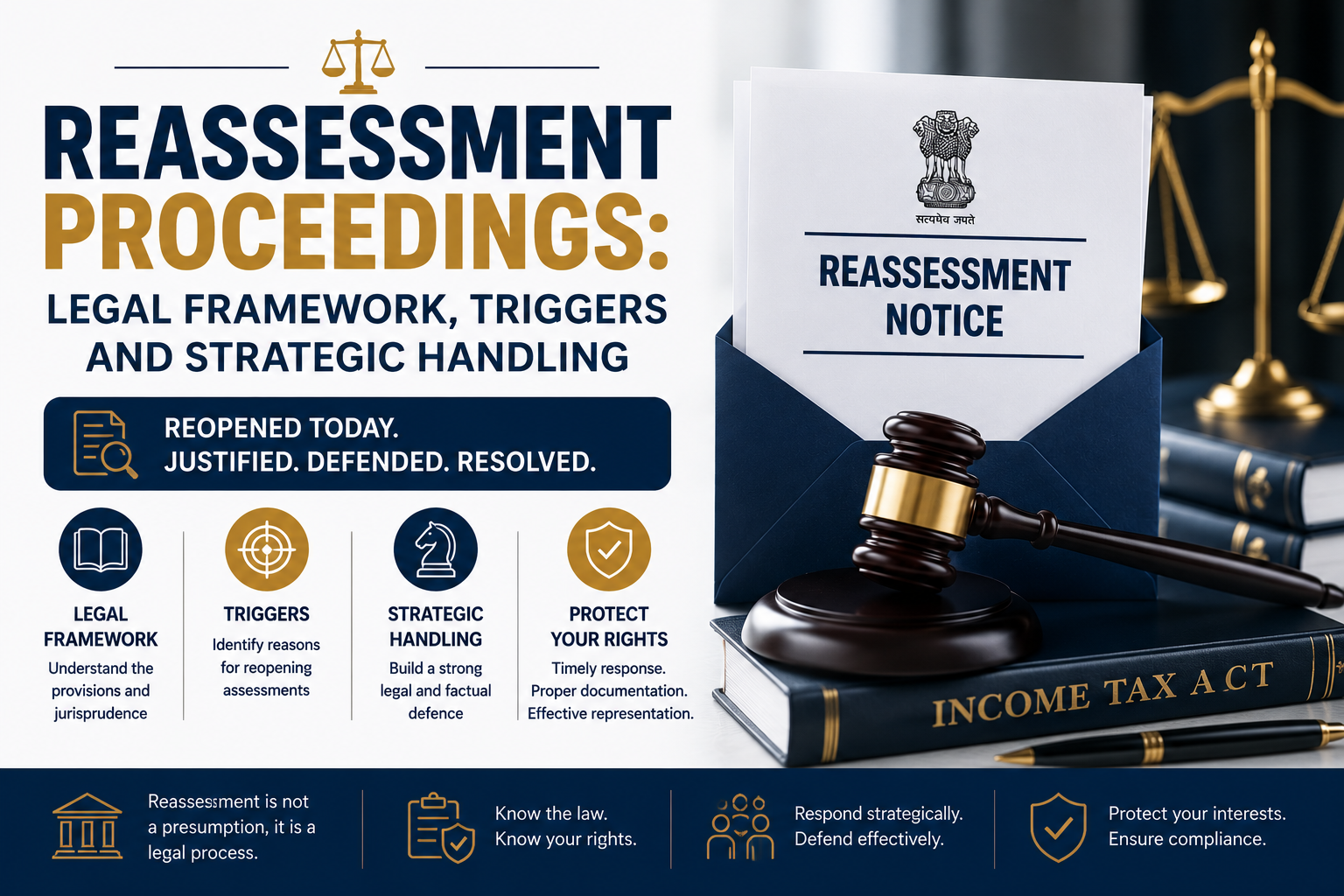
Reassessment Proceedings: Legal Framework, Triggers and Strategic Handling

Introduction
Reassessment is one of the most sensitive areas of income tax proceedings. It involves reopening of completed assessments on the ground that income has escaped assessment.
Such proceedings require careful handling, both legally and strategically.
Watch the Complete Video Explanation
This topic has also been explained in detail in the video below. Watch for practical clarity and structured understanding
Is video, we explain the entire process that takes place after filing an Income Tax Return in a simple, practical, and fear-free manner.
1. Concept of Escaped Income
Income is said to have escaped assessment when:
- Certain income was not disclosed
- Incorrect deduction was claimed
- Information was not available at the original assessment
- Data mismatch surfaced later
Reassessment is not routine scrutiny; it is reopening.
2. Legal Basis
Reassessment is generally initiated through notice under section 148.
Before issuing notice, the department must have “reason to believe” that income has escaped assessment.
This concept has been subject to judicial scrutiny.
3. Triggers in Modern Context
Common triggers today include:
- AIS mismatch
- High-value property transactions
- Foreign remittances
- Data from investigation wing
- GST turnover inconsistency
Data-driven environment increases reassessment exposure.
4. Procedural Flow
Step 1 – Notice issued
Step 2 – Assessee files response
Step 3 – Opportunity of hearing
Step 4 – Order passed
Each stage requires documentation and strategic reply.
5. Strategic Handling
Reassessment cases require:
- Reviewing original return
- Analysing recorded reasons
- Challenging jurisdiction if required
- Filing detailed factual response
- Preserving appellate rights
These cases should not be treated casually.
6. Risk Management
Professionals must:
- Review disclosure patterns
- Monitor high-value reporting
- Maintain reconciliation records
Preventive compliance reduces reassessment risk.
Conclusion
Reassessment proceedings reflect increased scrutiny. A disciplined and legally informed approach is essential.
Understanding reassessment reduces fear and increases control.
Tax ko samajhna mushkil nahi hai,
system ko samajhna zaroori hai.
Disclaimer: This article is for informational purposes only and does not constitute legal or tax advice. The views expressed are based on the current understanding of law and portal functionality as on the date of publication. Readers are advised to seek professional advice before taking any action.
If you have any general query or wish to understand the subject better, you may share your question in the comments below.